
From Safety Lock and Jet Flame to Flame Adjustment and Continuous Flame Lock — Exploring the Practical Value of a Professional Outdoor Ignition Tool
When camping, hiking, cooking outdoors or enjoying a barbecue, an ignition tool may be small, but its performance can make a noticeable difference to the overall experience. A conventional lighter is suitable for simple everyday tasks. However, in outdoor conditions involving wind, moisture, temperature changes or repeated ignition, users may place greater emphasis on flame performance, ease of operation, safety features and structural reliability.
An outdoor torch lighter is designed to address many of these needs. Using the DB606 outdoor red-flame torch lighter as an example, this case study reviews its design, key functions, practical applications and the performance checks that should be considered before making specific durability or environmental claims.
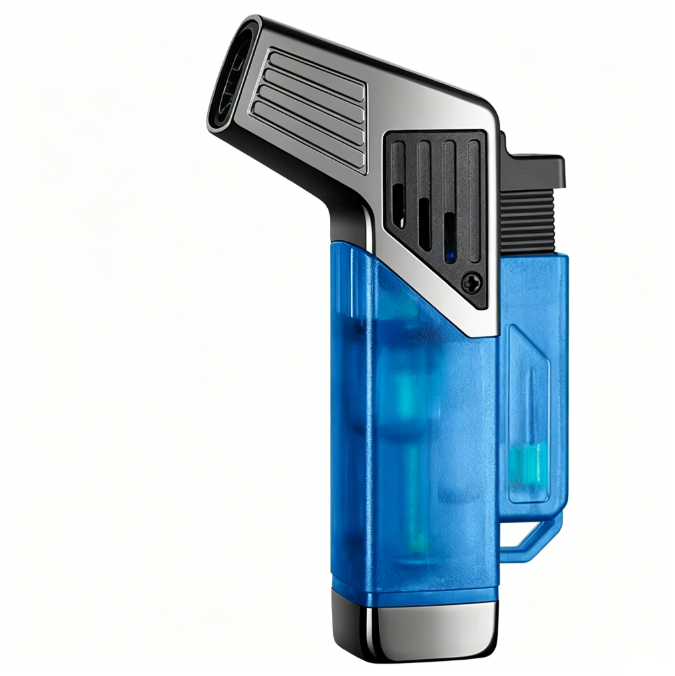
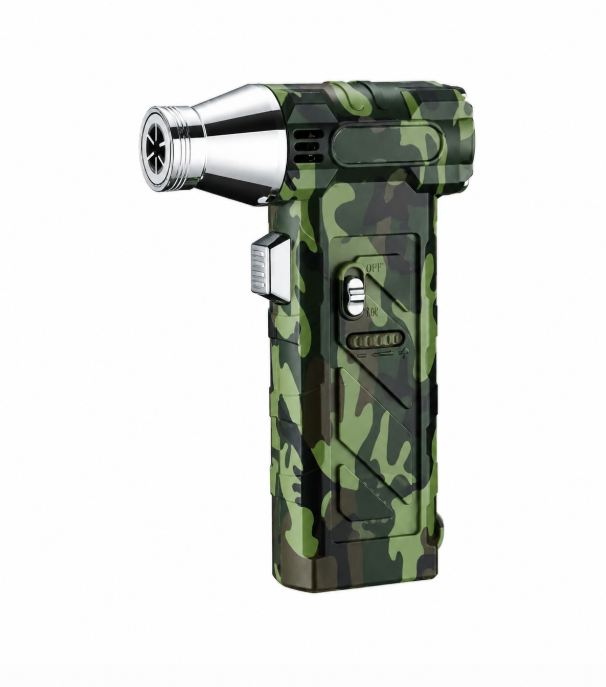
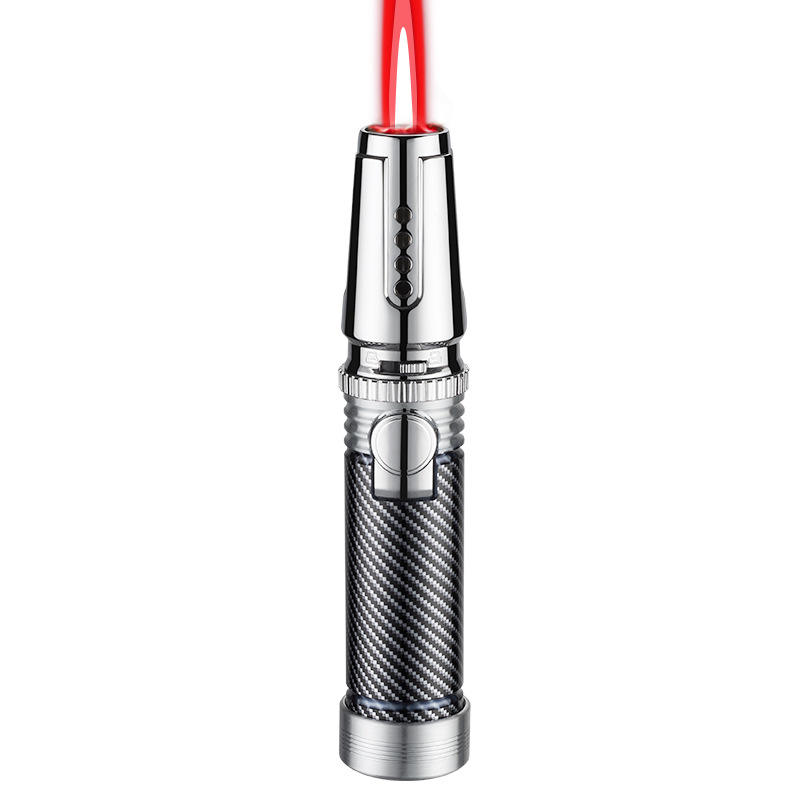
The DB606 features a slim, handheld form, a metallic-look finish, a carbon-fiber-style grip and a distinctive red jet flame. It combines a torch-style flame with operating features such as a safety lock, flame adjustment and a continuous-flame lock. Potential applications include outdoor barbecuing, lighting suitable fire starters at campsites, assisting with outdoor cooking and other appropriate ignition tasks.
Compared with a basic lighter designed primarily for everyday use, this type of product places greater emphasis on a concentrated flame, convenient repeated operation and user control. Its actual applications and operating limits should always follow the product instructions, verified test results and applicable local regulations.
2.1 Safety Lock: Helping Reduce Accidental Activation
During outdoor activities, a lighter may be stored in a backpack or tool bag alongside other equipment. Accidental contact with the ignition control can create an avoidable hazard. The DB606 is designed with a safety-lock feature. Users can unlock it before operation and relock it after use, helping reduce the possibility of unintended activation during carrying or storage.
A safety lock is an additional protective feature, not a substitute for safe handling. The lighter should be fully extinguished, allowed to cool and stored away from children, heat sources and flammable materials.
2.2 Red Jet Flame: A More Concentrated Ignition Output
The DB606 uses a torch-style jet flame. Compared with a conventional soft flame, a jet flame is more concentrated and may offer better ignition performance under some windy conditions. It can be useful for lighting suitable fire starters, barbecue charcoal and other materials intended for this type of ignition.
For outdoor cooking, a concentrated flame can direct heat toward a specific target area. At a campsite, it may be used for ignition tasks permitted by site rules. A torch flame is hot and concentrated: keep it away from people, tents, fuel canisters, liquid fuels and other flammable materials. Do not use an open flame in dangerous wind conditions, around dry vegetation or where fire restrictions apply.
2.3 Adjustable Flame Control: Matching the Flame to the Task
Different ignition tasks require different flame levels. The DB606 incorporates an adjustable flame-control structure, allowing users to adjust gas output and flame size within the range specified in the product instructions. A moderate setting may be suitable for smaller fire starters, while a stronger setting may be selected for tasks requiring more concentrated heat.
Adjustment can improve versatility, but the flame must never be set beyond the manufacturer's specified range. After adjustment, check that the flame is stable. Stop using the product if there is abnormal flare-up, flashback, unusual noise or a smell of gas, and follow the product instructions.
2.4 Continuous-Flame Lock: More Convenient Repeated Operation
When lighting several points during a barbecue or campsite setup, holding down an ignition control for an extended period may cause finger fatigue. The DB606's continuous-flame lock is designed to maintain a flame using the specified operating procedure, reducing the need to keep pressing the control and making repeated operation more convenient.
The continuous-flame lock does not mean the lighter can be left unattended. The user must keep the lighter in hand and maintain control of the flame, keeping it away from people and combustible materials. Release the lock and ensure the flame is fully extinguished immediately after the task. Never store, transport or leave the lighter unattended while the continuous-flame function is engaged.
2.5 Portable Design: Easy to Carry with Outdoor Gear
The slim handheld form is designed for convenient grip and storage. Its metallic-look finish and carbon-fiber-style grip also give the product a distinctive appearance. Unlike ignition devices that require an external power source, a gas torch lighter does not rely on battery power for operation and can be a practical addition to camping and barbecue equipment.
Portability does not mean unrestricted transport. Gas lighters contain flammable gas and may be subject to strict rules for air travel, checked baggage, mailing and cross-border shipment. Always confirm the carrier's requirements and destination regulations before transport.
A conventional lighter is compact and economical, and it can be entirely adequate for simple everyday ignition. However, a standard soft flame is more easily affected by wind, and some basic models do not offer adjustable flame control, a continuous-flame lock or a dedicated safety-lock feature. An outdoor torch lighter is designed to provide a more concentrated flame and additional control features for a wider range of suitable tasks.
| Comparison | Conventional Lighter | DB606 Outdoor Torch Lighter |
| Flame type | Usually a standard soft flame | Concentrated jet flame |
| Wind performance | More easily affected by wind | A concentrated flame may perform better in some windy conditions |
| Flame control | Depends on the model | Adjustable flame-control structure |
| Repeated operation | Usually requires the control to be held | Continuous-flame lock feature |
| Carrying protection | Depends on the model | Safety-lock feature |
| Typical use | Simple everyday ignition | Outdoor barbecue, camping and other suitable ignition tasks |
The point is not that a conventional lighter can never be used outdoors. Rather, when users value a concentrated flame, improved performance in some windy conditions, convenient repeated operation and additional operating controls, an outdoor torch lighter may be a better fit.
Outdoor conditions can be unpredictable. Rain and moisture, temperature changes, variations in altitude and atmospheric pressure, and accidental drops or impacts may all affect an ignition tool. For a product such as the DB606, features such as full waterproofing, reliable ignition at extreme altitude or impact resistance should not be assumed from appearance or construction alone. They must be demonstrated under defined test conditions.
4.1 Moisture and Accidental Water Exposure
Moisture may affect ignition components and other mechanical or electrical parts. During product development and inspection, the product should be evaluated against its intended protection level through appropriate humidity, rain or splash tests. After testing, inspectors should check ignition performance, gas tightness and structural condition. Moisture resistance, splash resistance and full waterproofing are different claims. Unless the relevant tests have been passed, the product should not be described as submersible or guaranteed to ignite after water ingress.
4.2 High Altitude, Low Temperature and Pressure Changes
At high altitude, atmospheric pressure is lower, while low temperatures can affect fuel vaporization and gas delivery. Some lighters may therefore experience a weaker flame, difficult ignition or unstable combustion. The concentrated design of a torch flame may improve the user experience in certain situations, but it does not guarantee operation at every altitude or temperature.
For the intended market and use conditions, manufacturers should define specific altitude, temperature and pressure ranges, conduct ignition tests accordingly and state only the verified operating limits in product literature.
4.3 Accidental Drops, Impacts and Mechanical Shock
Outdoor equipment can be dropped from a table, backpack or user's hand. A metallic appearance does not automatically mean that a product is impact-resistant or safe to use after a fall. Testing should specify the drop height, orientation and number of drops, with vibration or mechanical-shock tests added where appropriate. Inspectors should check the housing, ignition control, adjustment valve and safety lock, and confirm that there is no gas leakage or unintended ignition and that the product remains within its required functional limits.
If the lighter has suffered a significant impact, shows deformation, smells of gas or behaves abnormally, stop using it. Do not attempt to ignite or disassemble it.
4.4 Wind and Adverse Weather
A jet flame is more concentrated than a conventional soft flame and may provide better ignition performance under some wind conditions. However, strong wind can still deflect the flame and increase the risk of accidental ignition or fire spread. Do not use the lighter in strong winds, around dry vegetation, during wildfire restrictions or whenever local rules prohibit open flames.
A reliable outdoor ignition tool requires more than functional design. Quality control should cover incoming materials, assembly, finished-product inspection and clear user instructions. For a product such as the DB606, the following checks are recommended:
· Ignition-performance testing: evaluate ignition success, flame shape and combustion stability under defined conditions.
· Safety-lock testing: verify reliable locking, unlocking and resistance to unintended activation.
· Flame-adjustment testing: check flame variation and stability at different adjustment positions.
· Continuous-flame testing: verify sustained operation, release of the lock and normal shut-off.
· Gas-tightness testing: check for leakage using methods required by applicable standards.
· Environmental testing: assess temperature, humidity and, where relevant, specified altitude and pressure conditions.
· Protection testing: conduct moisture, rain or splash tests corresponding to the protection level being claimed.
· Mechanical-reliability testing: perform drop, vibration or impact tests and recheck safety and functionality afterward.
· Durability testing: repeat operation of the ignition control, safety lock, adjustment valve and continuous-flame mechanism.
Every external performance claim should match the actual test conditions and available reports. If a test has not yet been completed, use qualified wording such as 'designed with outdoor use in mind' or 'relevant testing can be arranged upon request' rather than promising complete waterproofing, operation at extreme altitude or resistance to drops under all conditions.
Outdoor users need more than a tool that simply produces a flame. They need an ignition product that is portable, straightforward to operate, capable of producing a concentrated flame and equipped with appropriate operating controls. By combining a safety lock, red jet flame, adjustable flame control and a continuous-flame lock, the DB606 outdoor torch lighter offers a broader set of operating options for outdoor barbecuing, camping and other suitable ignition tasks.
A dependable outdoor lighter should combine practical features with rigorous quality checks and clear instructions for safe operation. Choosing the right tool and following local fire-safety rules can help make outdoor activities more convenient, controlled and responsible.
Copyright © Wenzhou Debang Smoking Set Co., Ltd.All Rights Reserved - Privacy Policy
 EN